Silversmithing held a place of high esteem in Britain and across Europe, and this tradition carried over into the 18th-century North American colonies. In colonial America, owning finely crafted silver was a clear symbol of wealth, status and cultural refinement. The ranks of early American silversmiths include notable names such as Jacob Hurd of Boston, Philip Syng and the Richardson family of Philadelphia, and Daniel Christian Fueter of New York. Perhaps the most widely recognised today is Paul Revere, famed for both his craftsmanship and his role in the American Revolutionary War.
Among these artisans, Myer Myers (1723–1795) stands apart. Working in New York, he is noted not only for the exceptional quality of his rococo domestic and religious silver but also as the only Jewish silversmith known to have worked in the region at the time.
Myers’ output has been the focus of significant scholarly attention, with much research dedicated to cataloguing his surviving works. His silver tells a rich story of craftsmanship, the tastes of wealthy colonial patrons, and the cultural and religious life of New York’s Jewish community during a transformative period in American history.
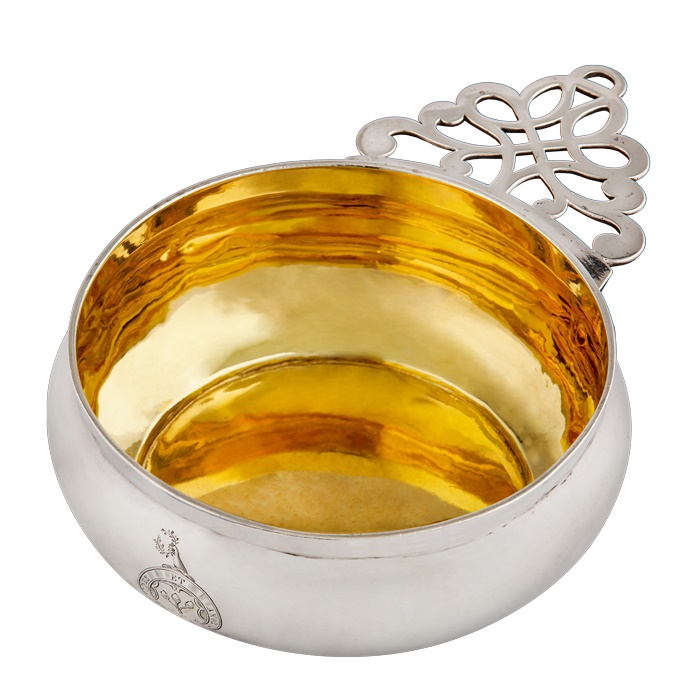
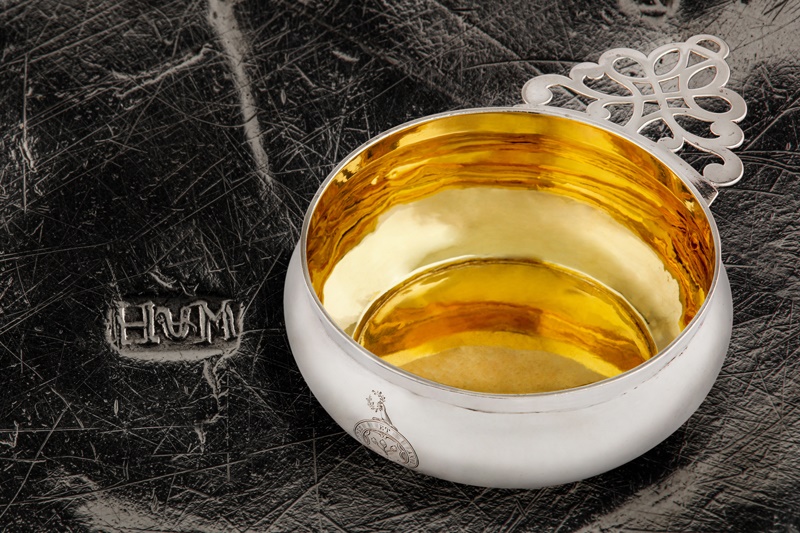
One standout piece in our upcoming Silver & Objects of Vertu sale is a silver porringer (Lot 281, estimate £4,000–£6,000) produced during Myer Myers’ partnership with Benjamin Halsted (1734–1817), which began around 1756. Their partnership brought together two of the most skilled silversmiths of the era and produced both decorative rococo pieces and more restrained works such as this porringer.
The porringer form itself is notable. In England, the design had largely fallen out of fashion by the early 18th century, but it remained popular in colonial America well into the late 1700s. Often confused in the past with medical vessels such as bleeding bowls, the single-handled porringer is more closely related to the European éculé or even early skillet lids. It served a functional, domestic purpose while also reflecting European aesthetic influences.
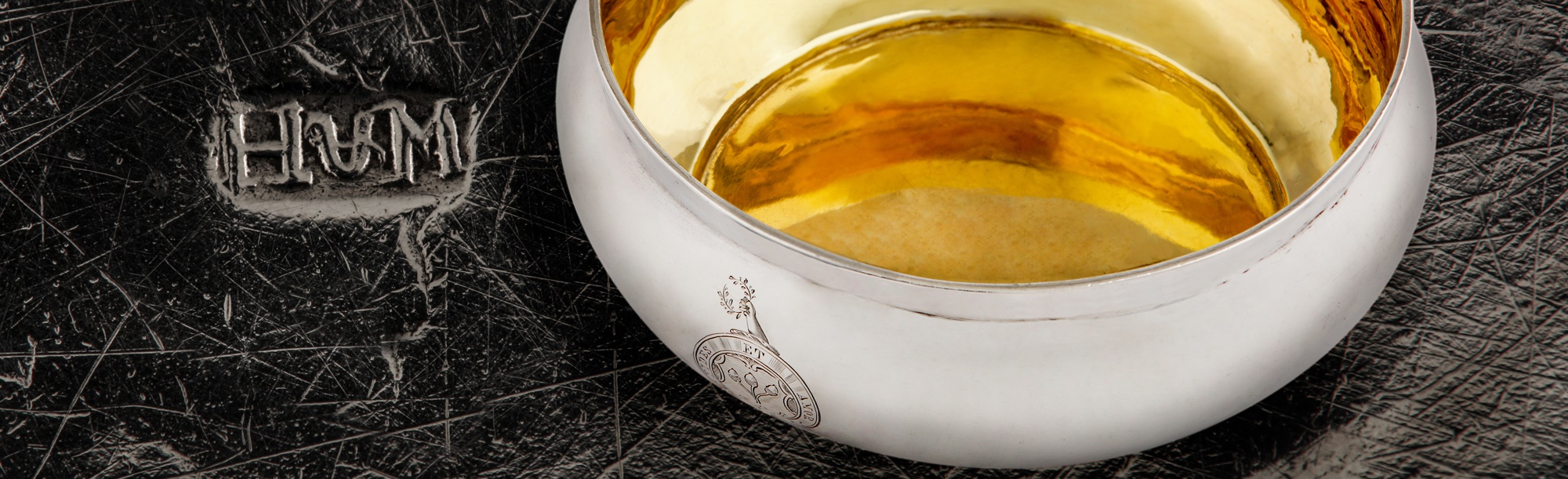
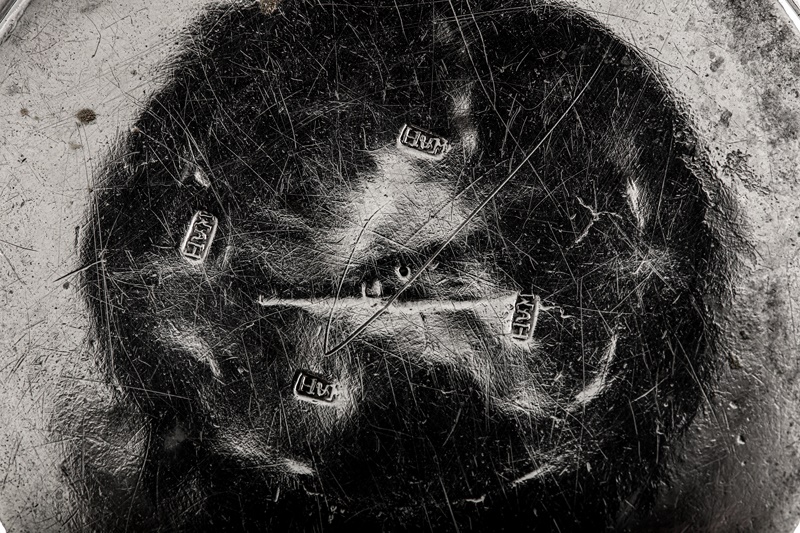
What makes this particular piece so significant is its maker’s mark. Stamped with the “H&M” mark, it represents the earliest known example of a commercial silversmithing partnership mark in colonial America. The practice of marking works with both partners’ initials would go on to become a defining feature of American silversmithing, but it began with Myers and Halsted.
With their partnership likely ending by 1766, this porringer is believed to date to the early 1760s, a period considered the height of Myers’ creative and technical output.
Colonial American silver is rare, and pieces from the hands of Myer Myers are even more so. Fewer than 20 works are known to have survived from the Myers and Halsted partnership, making this newly discovered porringer a valuable addition to a very limited corpus.
It was brought to Chiswick Auctions for assessment by John Rogers, Head of Silver & Objects of Vertu, whose interest in early American silver and obscure maker’s marks led to its identification. Speaking on the discovery, John Rogers said, "This is an exceptional opportunity for collectors to acquire a piece of colonial silversmithing history. A porringer of this importance, from a famed partnership like Myers and Halsted, is unlikely to appear at auction again for many years."
Contact Head of Department John Rogers at john.rogers@chiswickauctions.co.uk or submit an Online Valuation with the Silver & Objects of Vertu team.