
Emerging in the Netherlands in the early twentieth century, the Amsterdam School was a distinctive design movement that combined expressive architecture with sculptural ornament, bold interiors and finely crafted decorative objects, with roots in both Art Nouveau and Art Deco design.
While architecture remains the movement’s most visible legacy, the decorative arts produced during this period are equally significant - revealing how artistic experimentation extended into domestic spaces and everyday life.
Founded in Amsterdam in 1910–11, Winkelman & Van der Bijl was one of the most important workshops associated with the Amsterdam School. The firm specialised in distinctive metalwork, producing lighting, fireplaces and decorative objects in copper, brass and iron.

Hildo Krop for Winkelman & Van der Bijl clock
They are particularly noted for their clocks, often featuring triangular forms or radiating, sun-like motifs that encapsulate the Movement’s sculptural approach to design. Winkelman & Van der Bijl worked closely with leading artists such as Hildo Krop, contributing to landmark projects such as the Scheepvaarthuis. It was this building that inspired fellow architect Jan Gratama to coin the term “Amsterdam School”.
One of the most celebrated examples of Amsterdam School architecture and interior design is the Koninklijk Theater Tuschinski, opened in 1921. The cinema blends Amsterdam School, Art Deco and Jugendstil influences to create an immersive, theatrical environment intended to immerse visitors from the moment they enter.
A key figure behind this interior was Jaap Gidding, a prominent Dutch decorative artist and designer who significantly influenced the interior aesthetic of the Amsterdam School movement. Gidding designed the theatre’s spectacular entrance hall, including the iconic swirling marble carpets and the colour-changing glass skylight. He was a master of pattern, creating vibrant rugs and wall hangings characterised by bold abstraction and rich, contrasting colours such as orange, purple and black.

Jaap Gidding ‘Tryp’ rug
De Nieuwe Honsel was a prominent glass workshop that played a critical role in bringing the Amsterdam School style into Dutch interiors through lighting and stained glass.
Many of their most famous pieces were designed by Frits Woltjes and Hendrik Cornelis Herens, who integrated architectural elements like sculptural metal housings with the studio's trademark self-proclaimed "pyrochrome" glass.

The influence of the Amsterdam School could also be seen in the production of ceramics. De Distel, a prestigious Amsterdam-based factory, produced tile panels and ornamental ceramics used to decorate both brick façades and interiors of Amsterdam School buildings. The factory collaborated with several of the movement's leading figures – to create patterns and objects that reflected the movement's focus on "total art" (Gesamtkunstwerk).
Under the influence of artists such as Bert Nienhuis, the factory shifted from Art Nouveau towards more geometric motifs and matte glazes that complemented the bold forms of Amsterdam School architecture.
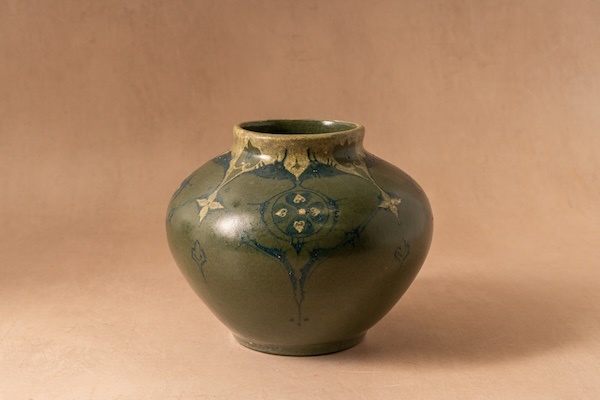
Bert Nienhuis for De Distel
Collecting works that embody the artistry and craftsmanship of the Amsterdam School is a chance to include amazing pieces of expressionist design in your interiors. Whether in metalwork, lighting, textile or ceramics, these distinctive works rarely come to auction and will provide a strong focal point in the home for years to come.
Our specialists regularly handle decorative arts from the early twentieth century, including metalwork, ceramics and lighting. If you would like a complimentary valuation or advice on consigning similar pieces, please contact us, design@chiswickauctions.co.uk or submit an online valuation.