22nd Apr, 2021 14:00
Modern & Post-War British Art
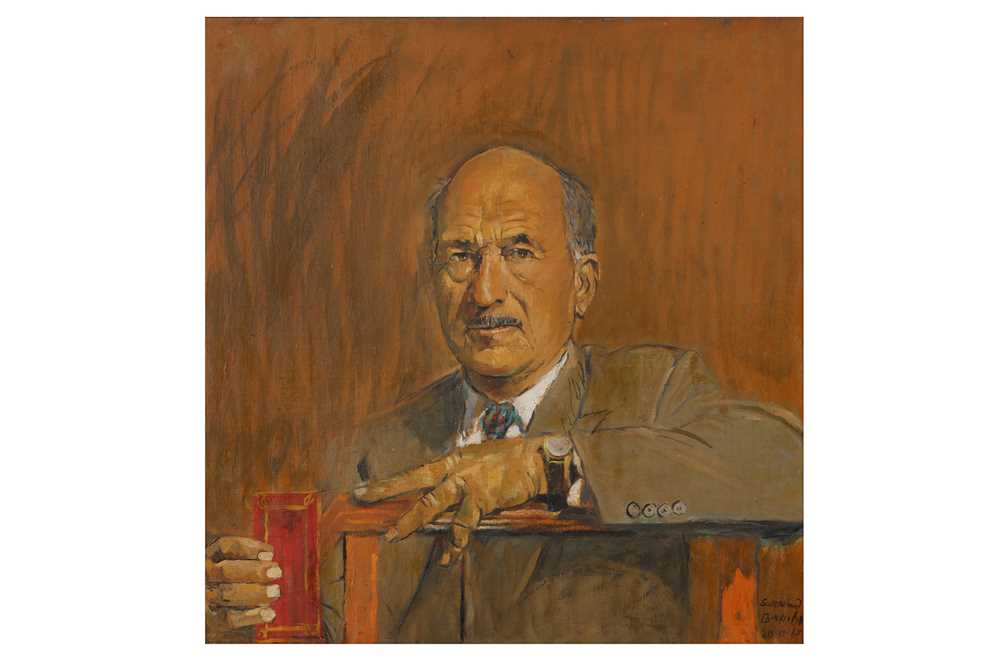
GRAHAM SUTHERLAND, O.M. (1903-2008)
GRAHAM SUTHERLAND, O.M. (1903-2008)
Study for a portrait of Dr Árpád Plesch
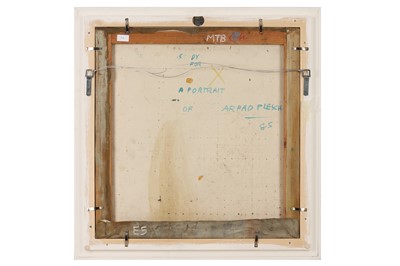
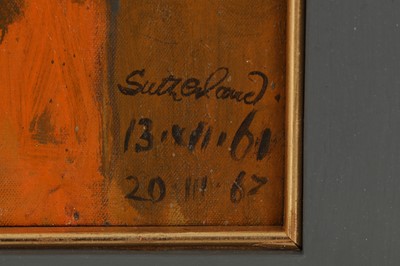
signed and dated Sutherland./13.XII.61/20.III.62 (lower right), signed again with initals and inscribed STUDY/FOR/A PORTRAIT/OF ARPAD PLESCH/G.S (on the reverse)
oil on canvas
67.3 x 65.4 cm (26 1/2 x 25 3/4 in)
Painted in December 1961-March 1962
PROVENANCE:
Commissioned by the sitter, Dr Árpád Plesch, 1961
Bequeathed to his wife, Madame Árpád Plesch, and by descent
Sale; Thierry de Maigret, Paris, 19 December 2018, lot 220, where purchased by the present owner
EXHIBITED:
F. Arcangeli, Graham Sutherland, New York, 1975, p. 41, pl. 229
J. Hayes, exhibition catalogue, Portraits by Graham Sutherland, London, National Portrait Gallery, 1977, p. 26, no. 73, pl. 3
K. Roberts, Current and forthcoming exhibitions, The Burlington Magazine, August 1977, no. 893, vol. 119, p. 583, pl. 65
Dr Árpád Plesch (1889-1974) was an international financier, banker and a lawyer. Born in Hungary, he studied at the University of Edinburgh before living in Germany, France, Switzerland and Italy. He was famous for is collection of drawings and books on botany and also for being the adviser of Giovanni Agnelli, president of Fiat. Plesch was introduced to Sutherland on a visit to London in December 1960 by Lord Beaverbrook and later commissioned a portrait by the artist.
Sutherland spent part of August and the most of September of the following year studying the sitter’s features which resulted in the creation of two versions of the portrait: one with a bright red background, which the sitter integrated in the panelling of his library in Villa Leonina and Study for a portrait of Dr Árpád Plesch, which was presented by the artist to Plesch’s widow in 1974, who kept it and gave the red version to her daughter.
The sitter’s clear forehead, confident gaze and determined expression showcase his powerful personality. Following on European tradition in portraiture, Sutherland captured Plesch’s passion for books by painting a red volume in his right arm. A powerful rhythm of movement has been created by the lively abstracted background. A master in portraiture, Sutherland focuses on the sitter’s face, hands and posture to capture their character, humanity and psychology.
Sutherland painted fewer than fifty portraits in the course of thirty years and was very selective refusing numerous commissions, focusing only on the ones that provided stimulus to his painting. On the one side, the physical element was crucial for him, similarly to the ‘hidden forms; he would find in a landscape, on the other side, the personality was of great importance: ’I…find it immensely fascinating.. to deal with people who have had pressures put upon them or who have the character necessary to direct great enterprises. There are psychological overtones in such people which is absorbing to try and render’ (G.S. quoted in J. Hayes, The Art of Graham Sutherland, Oxford, 1980, p. 33.
Sold for £5,000
Includes Buyer's Premium
Do you have an item similar to the item above? If so please click the link below to request a free online valuation through our website.